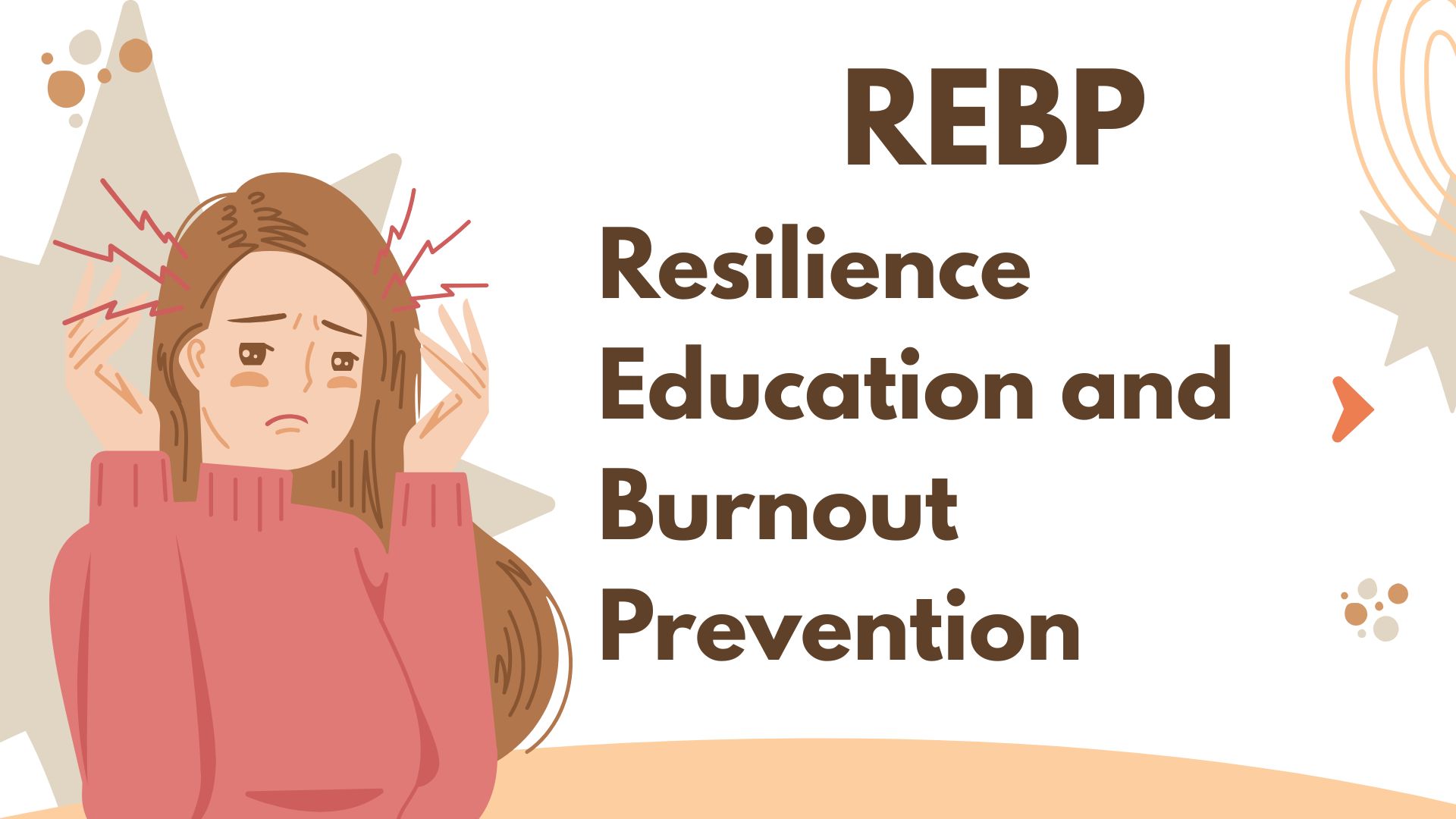
REBP – Resilience Education and Burnout Prevention
DATES
02-07.03.2026.
15-20.07.2026.
12-17.10.2026.
07-12.12.2026.
VENUE
Belgrade, Serbia
The aims of this course are to help professionals recognize first signs of stress and burnout, while also recognizing and understanding the risk factors related to their work environment. The participants of the course will develop personal resilience strategies, and learn how to manage stress effectively, how to regulate their emotions and how to maintain the mental well-being. The program is pointing to the importance of having boundaries, but also working on sustainable self-care and balancing personal work with their personal life. The aim is to give participants practical tools, such as mindfulness and cognitive-behavioral strategies, which they can implement later in their work. The goal is to promote resilience, and to work on self-growth, all in favor to improve work quality and to build a healthier and more supportive work environment.
REBP is a five day training which connects professionals to enhance personal resilience, prevention of burnout, and create healthier and more sustainable work environments. Participants will be given a practical knowledge for handling stress, enhancing emotional balance and improving self-growth trough interactive workshops, experimental learning and simulation based on real life scenarios. The program combines up to date research about resilience with practical methodology, with clear goal – to help participants to achieve meaningful change in their practice. At the end of the course, participants are going to leave prepared, but also energized and ready for building more healthier and supportive environment, both on personal and professional level.
CURRICULUM
Module 1:
- Introduction and mapping expectations and learning goals
- Understanding the term resilience – introduction to stress models (Lazarus & Folkman).
- Emotion regulation skills – mindful practices and concrete tools (Gross’s model)
Module 2:
- Introduction about Burnout and importance of prevention
- Factors of risk and protective factors
- Group work – red flag mapping
Module 3:
- Cognitive reframing – role play about stressful scenarios
- Group work – working on healthy coping mechanisms
- Active listening and assertive communication methods
Module 4:
- Understanding systematic resilience – brainstorming in groups (Masten, Unugar)
- Building boundaries – boundaries types, role play, conflict scenarios.
- Burnout reduction strategies – identifying organizational risks & solutions.
Module 5:
- Integrating personal and systematic resilience
- Resilience ecology model (Unugar, Masten, Bronfenbrenner)
- Reflection and self-evaluation
CERTIFICATION
At the end of the Erasmus training course, all participants receive official documentation confirming their successful completion of the programme. Each participant is awarded a Certificate of Attendance, issued by the organising institution, which verifies the learning outcomes achieved, the total number of training hours, and the course topics covered.
In addition, participants receive a Europass Mobility Certificate, prepared in accordance with the Erasmus+ quality standards. This document records the skills, competencies, and knowledge gained during the course and is fully recognised across Europe, making it a valuable addition to professional portfolios and CVs.
Together, these certificates provide participants with formal recognition of their professional development, supporting further career advancement, mobility opportunities, and validation of newly acquired competencies within their educational or professional institutions.
Instructor

Miloš Bajkić is a graduated Special Education and Rehabilitation specialist, with a wide experience in non-formal education, but who also has work experience in different field of work - educational, clinical and also correctional settings. His professional background includes work with children with behavioral disorders, vulnerable youth and adults, but also marginalized groups, with a strong emphasis on emotional well-being, behavioral support and assertive communication. Miloš has a structured, emphatic and participant-centred approach on training, which is enabling a safe and motivating environment for learning. He is committed to sustainable professional well-being, therefore, he focuses on sharing a practical tools to other professionals, which can enhance their resilience and enable them to practice in healthy and effective manner.
You May Like
Inclusive Classroom Practices: Identifying and Addressing Differences
The aim of the course is to enable participants to recognize and respond effectively to differences in the classroom, fostering a culture of acceptance and...

BrainBoost Academy: Advanced Cognitive Training for Youth & Adults
The aim of the course is to develop advanced cognitive, perceptual and multisensory skills in participants, empowering them to apply functional techniques of cognitive stimulation...
Teaching for All (Applying AI to Support Diverse Learners)
This course aims to empower educators with practical knowledge and hands-on skills to use Artificial Intelligence in ways that promote inclusion, accessibility, and equal participation...

Building a Collaborative Partnership Between Parents and Professionals in Early Intervention
Participants will learn how to strengthen parental competencies and offer appropriate support throughout the diagnostic process and daily life with a child experiencing developmental delays....

Stress management-burnout prevention
The goal of the course is to clarify the path that stress present to us, how we react to stressful situations, what emotions are involved...